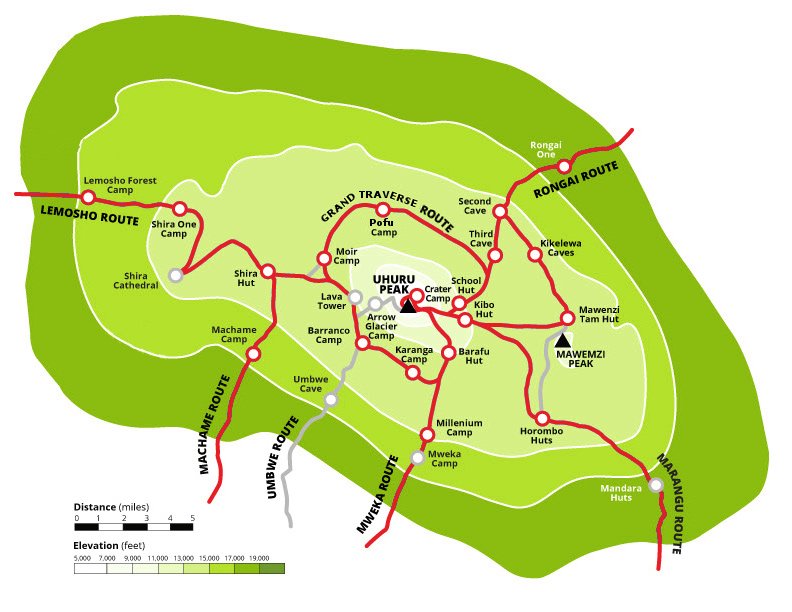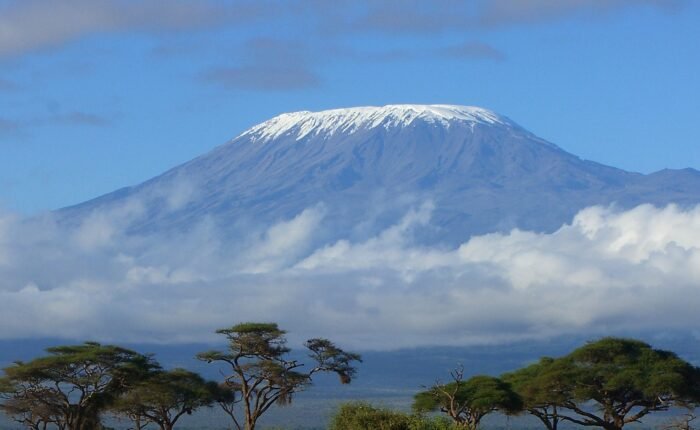
Rongai is the only route that approaches Kilimanjaro from the north, near the Kenyan border. It is quieter and drier than the southern routes and has a gentle gradient. The 7-day itinerary adds a night at Kikelewa Camp, giving you more time to adjust and a better chance of reaching the summit.
The extra night at Kikelewa spreads the ascent, which raises your summit odds compared with the 6-day Rongai.
Day 0 (before the climb): Arrival in Moshi or Arusha. Airport pick-up, hotel transfer, and a gear check and briefing with your guide. Overnight: hotel.
Day 1 – Rongai Gate to Simba Camp
Drive to Nale Moru Gate on the quiet northern side, then walk through farmland and pine forest.
Day 2 – Simba Camp to Second Cave
A steady climb through heath and moorland with views over the Kenyan plains.
Day 3 – Second Cave to Kikelewa Camp
A scenic day on the northern slopes with big, open views and very few other trekkers.
Day 4 – Kikelewa Camp to Mawenzi Tarn
Climb steadily to the foot of Mawenzi. This is the main acclimatisation day.
Day 5 – Mawenzi Tarn to Kibo Camp
Cross the lunar Saddle to Kibo. Early dinner and rest before the summit.
Day 6 – Summit day: Kibo to Uhuru Peak to Horombo Hut
Midnight start to Gillman’s Point and Uhuru Peak, then descend to Horombo.
Day 7 – Horombo Hut to Marangu Gate
Descend through moorland and forest via the Marangu route. Certificates at the gate.
After the climb: continue to your hotel for a hot shower and a celebratory dinner. Ask us about adding a safari or Zanzibar extension for your departure day.
| Tier | 1 | 2 | 3 | 4 | 5 | 6 | 7 | 8 | 9 | 10+ |
|---|---|---|---|---|---|---|---|---|---|---|
| Budget | 2,495 | 2,080 | 2,070 | 2,060 | 2,050 | 2,040 | 2,030 | 2,025 | 2,020 | 2,015 |
| Standard | 2,990 | 2,490 | 2,465 | 2,440 | 2,420 | 2,400 | 2,385 | 2,370 | 2,360 | 2,350 |
Prices are in US dollars per person and include 2026 park fees. Group prices apply when everyone books the same departure together. Park fees and government taxes are set by KINAPA/TANAPA and may change; the price is confirmed at payment.
Budget vs Standard: what’s the difference?
| Budget | Standard | |
|---|---|---|
| Accommodation | Quality shared tents and mattresses | Roomy waterproof tents and thick mattresses, with a private mess tent |
| Toilet | Shared camp toilet facilities | Private portable flush toilet tent |
| Crew | Licensed guide, assistant guide, cook, porters | Larger crew with extra porters and a dedicated waiter |
| Meals | 3 meals a day, tea and coffee | 3 meals a day plus snacks and a wider menu |
| Sleeping gear | Mattress and standard sleeping bag provided | Premium four-season sleeping bag and liner provided |
| Table, chairs | Dining tent with table and chairs | Private mess tent with table and chairs |
| Hotel in Moshi | 1 night before the climb (B&B) | 2 nights, before and after the climb (B&B) |
Both packages include licensed, English-speaking guides, emergency oxygen, a pulse oximeter, a first-aid kit and emergency evacuation support.
What’s included (both packages)
What’s not included
Park fee breakdown (per climber, 2026)
| Fee | Calculation | Amount |
|---|---|---|
| Conservation fee | US$70 × 7 days | US$490 |
| Camping fees | US$50 × 6 nights | US$300 |
| Rescue fee | one-off | US$20 |
| Subtotal | US$810 | |
| VAT (18%) | US$145.80 | |
| Total park fees | US$955.80 |
Guide and porter entrance fees are paid by us and included in the package.
You don’t need technical climbing skills, as it is a walk, not a climb. It is still a demanding multi-day trek at altitude, so good fitness and steady training in the months before help a lot. Difficulty on this itinerary is: Moderate.
The northern slopes get less rain than the south, which makes Rongai a good choice in the wetter months. It is still a mountain, so expect cold and wet weather at any time.
No. Many of our climbers are first-timers. We recommend regular hiking, cardio and leg strengthening for at least 8–12 weeks before your trip.
The best months are January–March and June–October (a good option in the rainy months), with clear skies and the most stable conditions. Kilimanjaro can be climbed all year, but April–May and November are the main rainy months.
Our guides are trained in altitude-sickness management and check your oxygen saturation and pulse twice a day. We follow the ‘climb high, sleep low’ principle, carry emergency oxygen and a first-aid kit, and arrange a safe descent if needed.
Yes. Prices are per person, and the more people in your group, the lower the price per person (see the table above). Park fees, crew wages, meals, camping or hut fees and transfers are included.
Tipping is voluntary but expected, and it is a large part of the crew’s income. As a guide, budget about US$250–$400 per climber for a 6–7 days climb and US$300–$450 for 8–9 days, shared across the whole crew. We explain the process in your pre-climb briefing.
A 30% deposit confirms your booking, and the balance is due before the trek starts. Free cancellation up to 30 days before departure; 50% refund between 30 and 15 days; no refund within 15 days. We accept bank transfer, credit card, or Online Payment.