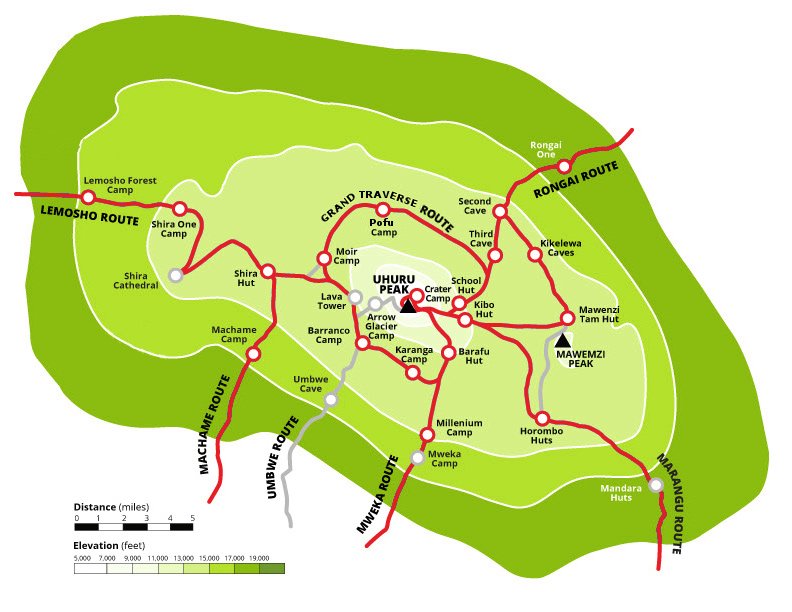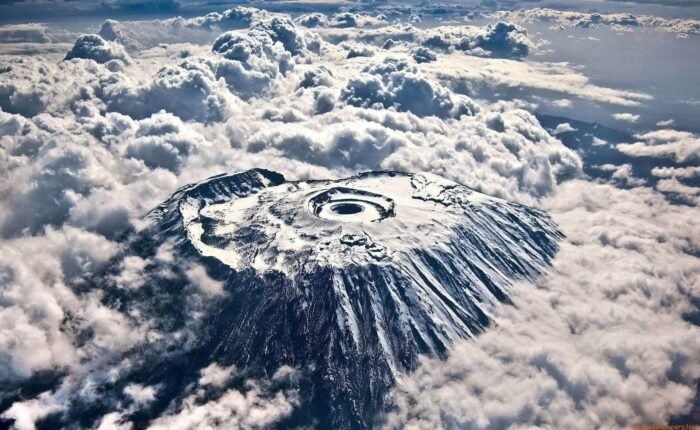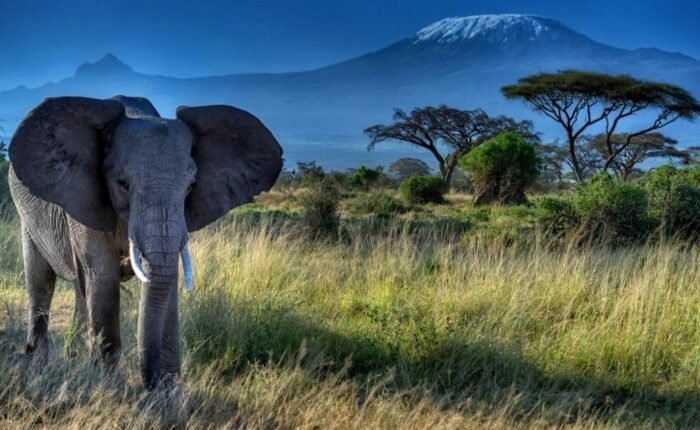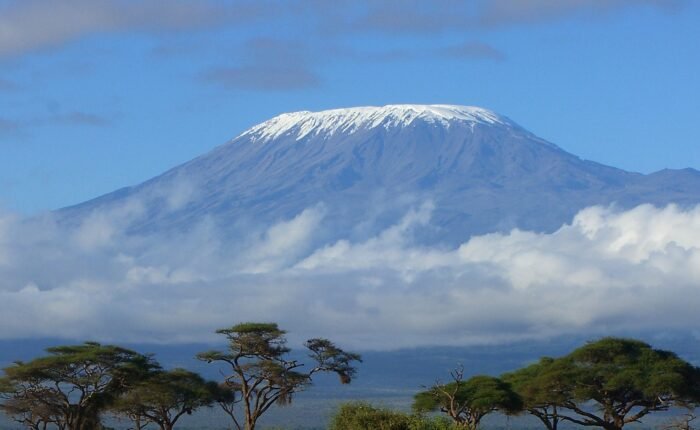
Machame, the ‘Whiskey Route’, is the most popular route on Kilimanjaro, and for good reason. It passes through five climate zones, from rainforest to arctic summit, climbs to Lava Tower for acclimatisation, and scales the Barranco Wall. The 7-day itinerary adds an extra night at Karanga, which gives your body the time it needs before summit night.
The ‘climb high, sleep low’ profile via Lava Tower gives good acclimatisation, and the extra day at Karanga helps your body prepare for summit night.
Day 0 (before the climb): Arrival in Moshi or Arusha. Airport pick-up, hotel transfer, and a gear check and briefing with your guide. Overnight: hotel.
Day 1 – Machame Gate to Machame Camp
Drive to the gate, register, and walk through dense rainforest on a steady trail.
Day 2 – Machame Camp to Shira Camp
Climb out of the forest into heath and across the Shira Plateau, with big views of Kibo.
Day 3 – Shira Camp to Lava Tower to Barranco Camp
Climb to Lava Tower (4,630 m) for acclimatisation, then drop to the Barranco Valley and its giant groundsels.
Day 4 – Barranco Camp to Karanga Camp
Climb the Barranco Wall and cross the Karanga Valley. A short day, which helps your body adjust.
Day 5 – Karanga Camp to Barafu Camp
A short walk up to base camp. Rest, eat early, and prepare for the summit.
Day 6 – Summit day: Barafu to Uhuru Peak to Mweka Camp
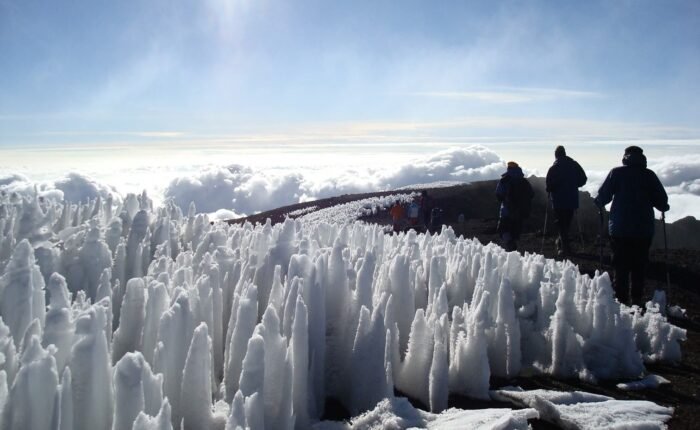
Midnight start, sunrise at Stella Point and Uhuru Peak, then a long descent to Mweka Camp.
Day 7 – Mweka Camp to Mweka Gate
Forest descent to the gate, summit certificates, then transfer to your hotel for a hot shower.
After the climb: continue to your hotel for a hot shower and celebration dinner. Ask us about adding a safari or Zanzibar extension for your departure day.
| Tier | 1 | 2 | 3 | 4 | 5 | 6 | 7 | 8 | 9 | 10+ |
|---|---|---|---|---|---|---|---|---|---|---|
| Budget | 2,495 | 2,080 | 2,070 | 2,060 | 2,050 | 2,040 | 2,030 | 2,025 | 2,020 | 2,015 |
| Standard | 2,870 | 2,390 | 2,365 | 2,340 | 2,320 | 2,300 | 2,285 | 2,270 | 2,260 | 2,250 |
Prices are in US dollars per person and include 2026 park fees. Group prices apply when everyone books the same departure together. Park fees and government taxes are set by KINAPA/TANAPA and may change; the price is confirmed at payment.
Budget vs Standard: what’s the difference?
| Budget | Standard | |
|---|---|---|
| Accommodation | Quality shared tents and mattresses | Roomy waterproof tents and thick mattresses, with a private mess tent |
| Toilet | Shared camp toilet facilities | Private portable flush toilet tent |
| Crew | Licensed guide, assistant guide, cook, porters | Larger crew with extra porters and a dedicated waiter |
| Meals | 3 meals a day, tea and coffee | 3 meals a day plus snacks and a wider menu |
| Sleeping gear | Mattress and standard sleeping bag provided | Premium four-season sleeping bag and liner provided |
| Table, chairs | Dining tent with table and chairs | Private mess tent with table and chairs |
| Hotel in Moshi | 1 night before the climb (B&B) | 2 nights, before and after the climb (B&B) |
Both packages include licensed, English-speaking guides, emergency oxygen, a pulse oximeter, a first-aid kit and emergency evacuation support.
What’s included (both packages)
What’s not included
Park fee breakdown (per climber, 2026)
| Fee | Calculation | Amount |
|---|---|---|
| Conservation fee | US$70 × 7 days | US$490 |
| Camping fees | US$50 × 6 nights | US$300 |
| Rescue fee | one-off | US$20 |
| Subtotal | US$810 | |
| VAT (18%) | US$145.80 | |
| Total park fees | US$955.80 |
Guide and porter entrance fees are paid by us and included in the package.
You don’t need technical climbing skills, as it is a walk, not a climb. It is still a demanding multi-day trek at altitude, so good fitness and steady training in the months before help a lot. Difficulty on this itinerary is: Moderate to challenging.
With proper acclimatisation and experienced guides, success is high. Our guides’ experience, the climb-high-sleep-low profile and the extra night at Karanga all help. Please ask us for our current success figures.
No. Many of our climbers are first-timers. We recommend regular hiking, cardio and leg strengthening for at least 8–12 weeks before your trip.
The best months are January–March and June–October, with clear skies and the most stable conditions. Kilimanjaro can be climbed all year, but April–May and November are the main rainy months.
Our guides are trained in altitude-sickness management and check your oxygen saturation and pulse twice a day. We follow the ‘climb high, sleep low’ principle, carry emergency oxygen and a first-aid kit, and arrange a safe descent if needed.
Yes. Prices are per person, and the more people in your group, the lower the price per person (see the table above). Park fees, crew wages, meals, camping or hut fees and transfers are included.
Tipping is voluntary but expected, and it is a large part of the crew’s income. As a guide, budget about US$250–$400 per climber for a 6–7 day climb and US$300–$450 for 8–9 days, shared across the whole crew. We explain the process in your pre-climb briefing.
A 30% deposit confirms your booking, and the balance is due before the trek starts. Free cancellation up to 30 days before departure; 50% refund between 30 and 15 days; no refund within 15 days. We accept bank transfer, credit card, or Online Payment.